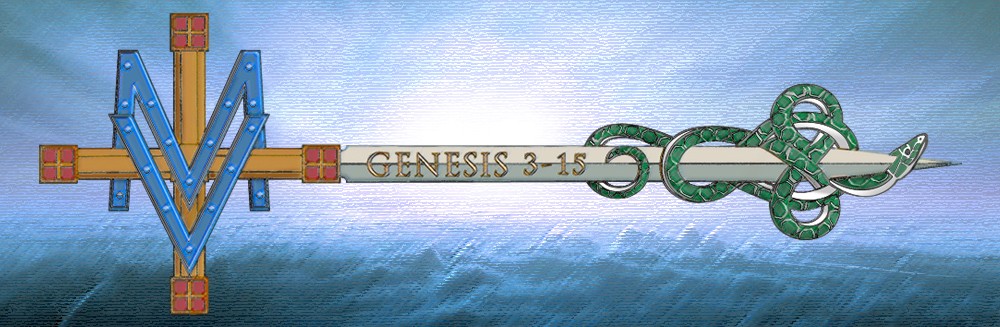
The Holy Grail of True Knighthood

November 23, 2009

True knighthood is the Holy Grail of manhood, a revelation attainable only by the pure.  The proud are ever barred from taking a draught from it.

Our very captivation with the Holy Grail consists in the fact that it has not been found and only few have even seen it.  And, of course, the reason that the mysterious cup remains ever out of reach for the ordinary man and is because its quest is fraught with danger:  fearful obstacles, inscrutable riddles, and deadly foes.

To those who possess true manliness, such obstacles are the reason why The Quest is so appealing.  By definition manliness is the penchant to overcome obstacles. The more hopeless the attainment, the bigger and better is the man who laughs in the face perils to be found there.  Those who are lesser men still aspire to the Grail, but fear leads them to experience the danger only vicariously by following along at a safe distance, through spectator sports, litrerature and movies.

And yet there is a temptation in that boldness to which those gallant men of the Round Table too easily succumb.  The bigger and better that a man thinks he is, the more likely he is to fail utterly in attaining the goal.  Gawain, for example, showed himself the fool for this very reason.  And Lancelot had to be taken down a few notches (many actually) before he was even granted a partial fulfillment of his desire.  Galahad attained the grail, not so much by his prowess, but more so, by his humility and purity.

There is a strange and wonderful coincidence of opposites in the embodiment of true chivalry:  courage, strength, boldness and skill, on the one hand; reverence, humility, meekness, and deference on the other.

In a sermon written during his Anglican Period, entitled, “The Weapons of the Saints,” Venerable John Henry Cardinal Newman couched the spiritual life in terms of a war in which the stratagem for victory demands an inversion of worldly values:

But in that kingdom which Christ has set up, all is contrariwise. “The weapons of our warfare are not carnal, but mighty through God to the pulling down of strongholds.” What was before in honour, has been dishonoured; what before was in dishonour, has come to honour; what before was successful, fails; what before failed, succeeds.

It is this inversion that constitutes the real difficulty to the attainment of the Holy Grail of true knighthood.  It is the riddle of riddles.  The Black Knight, enemy of our souls, guards the bridge that leads to the hermit who is ensconced away from the manners of worldly men.  It is from him that we are to unlearn our pride and find the real weapons by which we are to succeed in our quest.

Cardinal Newman’s sermon is a commentary on Our Lord’s words: Many that are first shall be last, and the last shall be first (Mt 19:30).  And he supports his thesis from many other passages of the New Testament concerning, for example, strength made perfect in weakness (2 Cor 12:9), the of putting down the proud and the exalting of the humble (Lk 1:52), the blessedness of those who suffer and the woes of those who are satisfied (Mt 5:2-10; Lk 6:24-26), and God’s choice of the weak and despised to do his work (1 Cor 1:27).  It should be abundantly clear to anyone with a modicum of familiarity with scripture that God triumphs in and through those who have rejected worldly ambition and self-assuredness.

The invisible powers of the heavens, truth, meekness, and righteousness, are ever coming in upon the earth, ever pouring in, gathering, thronging, warring, triumphing, under the guidance of Him who “is alive and was dead, and is alive for evermore.”

Truth, meekness and righteousness, according to Venerable Newman, are the real weapons of the saints, the means by which they are victorious over Satan, sin and death.  The Holy Grail of Christian Knighthood is so hidden that in order to find it the knight must lose himself in the process.

This is that intangible, greater thing, after which young men aspire.  It is the stuff of true nobility.  It is strength without arrogance, command without self-interest.

Venerable Newman notes that “we like to hear marvellous tales, which throw us out of things as they are, and introduce us to things that are not.”  The paradox of the cross and of the victorious King who triumphs through His own death is the cosmic myth, the retelling of which is the incantation that opens the sealed doors of our hearts. He that openeth and no man shutteth, shutteth and no man openeth, is the only one with the key (Ap 3:7).

The beloved disciple saw Him mounted on a white horse, and going forth “conquering and to conquer.” “And the armies which were in heaven followed Him upon white horses, clothed in fine linen, white and clean. And out of His mouth goeth a sharp sword, that with it He should smite the nations, and He shall rule them with a rod of iron.” [Rev. xix. 14, 15.]

The Quest of the Holy Grail is a lesser myth, as are all other stories when compared to the gospel myth in which the most fantastic tale is merged with history, and where what Tolkien called eucatastrophe, a literary climax beyond our wildest hopes, is made the substance of all our hopes and the ground upon which we walk in the daylight of this world.

Indeed, the return of the king in Tolkien’s mythology is an ascendency by way of descent.  Aragorn and the Dúnedain are content to be despised if that will better equip them to protect and defend the peoples of Middle Earth.  Aragorn himself must choose the path leading downward, literally underground, through the Paths of the Dead under the White Mountains, like Christ in His harrowing of hell, if he is to triumph on behalf of those entrusted to his care.

After Gandalf  had “passed through fire and deep water,” and had completed his own christic transformation, he delivered a message to Aragorn from the Lady of Light, Galadriel:

Where now are the Dúnedain, Elessar, Elessar?
Why do thy kinsfolk wander afar?
Near is the hour when the Lost should come forth,
And the Grey Company ride from the North.
But dark is the path appointed for thee:
The Dead watch the road that leads to the Sea (Book III, Chapter V).

Aragorn chose the path of truth, meekness and righteousness.  He was prepared to face his fear, and he was not afraid to confront his own ego with the double-edged sword of God’s truth.  He chose to go down in order to go up, to be last in order to be first.  Yet the myth of Aragorn cannot be a vicarious substitute for our own humiliation.  We must really experience it.  Newman has it right:

We so love the idea of the invisible, that we even build fabrics in the air for ourselves, if heavenly truth be not vouchsafed us. We love to fancy ourselves involved in circumstances of danger or trial, and acquitting ourselves well under them. Or we imagine some perfection, such as earth has not, which we follow, and render it our homage and our heart. Such is the state more or less of young persons before the world alters them, before the world comes upon them, as it often does very soon, with its polluting, withering, debasing, deadening influence, before it breathes on them, and blights and parches, and strips off their green foliage, and leaves them, as dry and wintry trees without sap or sweetness.

We must not loose our idealism as we grow older, but “heavenly truth” should purify our tendency to experience knighthood vicariously through its trappings and shards.  Ours is to be the knighthood of the real Dúnedain, a hidden knighthood in search of the hidden, but very real Holy Grail.

As a Franciscan, I have had many opportunities to reflect upon the militant example of Saints Francis and Maximilian, and of the great tertiary St. Louis of France.  The Holy Patriarch of the Seraphic Order, Our Holy Father St. Francis, was well aware of the Arthurian legends and aspired to knighthood and the Holy Grail himself.  Later, after he too had chosen the path downward, he called the simple brothers who lived in seclusion and despised status and pomp, his “Knights of the Round Table.”

In this last week of ordinary time, during the “octave” of the Feast of Christ the King, we look for His return at the end of the world, when he will preside over the cosmic resolution to the perennial struggle of St. Michael and the dragon.  Then He will raise his wounded hands over the universe and all of us will be witnesses of the full revelation of His truth, a more powerful illumination than possession of the Grail itself.  Then we will all know what true chivalry is and whether we are worthy to drink from the cup filled by the hands of Him who carried the sword of truth and slayed the dragon by His humble acceptance of our condition and by His willing suffering and death.

The weapons of the true knight are those of the saints: truth, meekness and righteousness.  They are best fitted to help us along the way of our Quest, a path that leads up a narrow crag in a mountain.  But this path to the heights strangely leads us downward by many uneven steps, until we arrive in the sanctuary of the Holy Grail and find rest in the yoke of Christ on the Holy Mountain of His Passion, Death and Resurrection.


Marian Chivalry Online

November 14, 2009

Made it on Headline Bistro, thanks to Dawn Eden.


Facing Reality

November 11, 2009

Thank you, soldier, for not being a politically correct, sellout pinhead, like so many others, while our troops fight and die for their country, sometimes at the traitorous hands of their own comrades.


A Penitent’s Reflection on Halloween

October 31, 2009

all_saints_day

Grant, we beseech Thee, O Lord, that Thy faithful people may ever rejoice in honoring all Thy Saints, and may be defended by their unceasing prayers (post-communion prayer, Solemnity of All Saints).

After Holy Communion has been received during the Mass for the Solemnity of All Saints, the priest asks Almighty God that the prayers of the saints be a defense to all the faithful.  All the saints are our elder brothers and sisters who have been victorious over sin and death through Christ’s death and resurrection.  These are they who have come out of the great tribulation; they have washed their robes and made them white in the blood of the Lamb (cf. Ap 7:14).  They have passed through the fire and have come out the other side unscathed (cf. Dn 3:26).  Now they are present to us in the Holy Spirit as our defenders and protectors.

But we must want to be protected.  He who loves danger will perish in it (Eccl. 3:27).  And danger is everywhere.  We have a real enemy who is bent upon our destruction and all of sacred history is a chronicle of this endless war. Our enemy is our constant foe and our better in the art of war.  For our wrestling is not against flesh and blood; but against principalities and powers, against the rulers of the world of this darkness, against the spirits of wickedness in the high places (Eph 6:12).  We are not strong enough to resist this enemy, unless we want to be protected by one who is stronger.

Read the rest of this entry »


Happy Feast of Mary Victrix

October 7, 2009

Lepanto New

The Feast of the Holy Rosary is a feast of prayer and recourse to the Blessed Mother. It is also a feast of the action of brave men who were men of prayer. That is why it is also the Feast of Our Lady of Victory.  On this day we pray for the Spirit of Lepanto.

In the current postcommunion oration for the Mass we find the closest thing in the current formulary to reference to Our Lady of Victory:

May we be helped we beseech Thee, O Lord, by the prayers of Thy most holy Mother, whose Rosary we celebrate; that we may draw strength from the Mysteries which we commemorate, and likewise obtain the fruit of the Sacraments which we have received: Who livest and reignest with the God Father in the unity of the Holy Spirit, God, forever and ever.  Amen.

We are to draw strength from the paschal mystery, the mystery of the sacrificial love of Christ for all men.  The mysteries of which the oration speaks are the death and resurrection of the Lord.  But the feast integrates into these mysteries the mystery of Our Lady’s victorious mediation, and the “strength” which we draw from our participation in the Mysteries of Christ through Her mediation.

On this occasion I have returned to vlogging my series Standing Fast which you will be able find each week in the side bar on the right.  (It should be up momentarily.) Well I guess the widget won’t fly yet, so here is the video:

Here is the link to The Soul of the Apostolate that I mention in the video. And a Google Books version here.

You will also be able to find it on AirMaria as a regular post in a larger format.  I have delayed my post today due to the learning curve with some new video software.  My apologies for not posting sooner on Our Lady’s feast day.

The above painting was created by Tony Stafki and is available in various kinds of prints.  Tony sent my some information about the painting:

  • The battle formation of the ships just before the main clash.
  • The Catholic ships form a cross and the Muslim ships form a cresent.
  • The standard of the Holy Cross which was blessed by Pope Pius V can be seen on Don Juan of Austria’s ship which is leading the charge
  • Papal ships (St. Peter’s keys)
  • The miracle of the wind: just before the armies met the wind completely switched in favor of the Catholic ships.
  • Devils can be seen amongst the Muslim ships (they were summoned from hell by the Muslim leader).  The devils have peacock feathers as swords, a manifestation of their pride.
  • Our Lady of Victory with a sword in one hand ready to crush the devils and the other hand outstretched to the Muslim souls.
  • St. Michael leading the Angels
  • There are small white lights by the oars on the Muslim ships representing the souls of the Catholic prisoners.

The image of Our Lady with the sword reminds me of this:

The King looked up, and what he saw
Was a great light like death,
For Our Lady stood on the standards rent,
As lonely and as innocent
As when between white walls she went
And the lilies of Nazareth.

One instant in a still light
He saw Our Lady then,
Her dress was soft as western sky,
And she was a queen most womanly—
But she was a queen of men.

Over the iron forest
He saw Our Lady stand,
Her eyes were sad withouten art,
And seven swords were in her heart—
But one was in her hand.

I have always been a little put off that the image of Our Lady of Victory does not have a sword:

OLVictoryPrint

Nor images of our Lady at Lepanto, such as this:

Maria-Rosa-Lepanto

Hats off to Tony.


St Patrick and the Chieftains

October 3, 2009

Hill of Shane

On the great vigil of Easter in 433, which was also March 25th, Feast of the Annunciation, St. Patrick determined to meet the Celtic chieftains and High King Leoghaire  on their own ground at Tara by and challenge their superstitious and idolatrous druidism.  The pagans were prepared for the messenger of Christ, as their demoniac prophets had divined his presence.au

St. Patrick made his presence known opposite Tara on the summit of the hill of Slane where he kindled the Easter fire.  The druid priests responded by appealing to Leoghaire:  ”O King, live for ever. This fire, which has been lighted in defiance of the royal edict, will blaze for ever in this land unless it be this very night extinguished.”  By order of the king the druids were sent to the hill of Slane to put out Patrick’s fire and slay him, but by miraculous intervention, both the fire and the saint were protected from all harm, much to the consternation of the pagans.

In the morning the saint accompanied by his Christian band formed the Easter procession and proceeded from the fire on the hill of Slane to the Tara.  St. Patrick was arrayed in full episcopal attire.  As he approached the stronghold of Satan, the druid priests made use of their black incantations to cover all the land in darkness, but at his prayers this wile was undone and the sun shown gloriously in the Easter Day.  In the light the druid high priest was then raised off the ground into the heights only to be brought down again by divine power and dashed on the rocks below.

In this way St. Patrick defeated paganism in Ireland and proved to all the cheiftans the truth of the Catholic religion.  Through his great faith and his willingness to risk his life before the minions of Satan, the Saint one the admiration of the King and obtained from him permission to spread the true faith throughout the realm.

Life is always a struggle between light and darkness. It is the story of mankind.  It is the story of Ireland and it is the news of the week:

God bless Dana Rosemary Scallon, a modern day Joan of Arc, who in the past was not afraid of being attacked by the Irish bishops in defense of the right to life.  Read her largely unheeded exhortation to the Irish people:

This is no longer about the politics of right and left, it is about right and wrong. I can no longer stay silent about the wilful betrayal of Ireland’s Constitution.

BTW, the preamble of that constitution reads thus:

In the Name of the Most Holy Trinity, from Whom is all authority and to Whom, as our final end, all actions both of men and States must be referred,

We, the people of Éire,

Humbly acknowledging all our obligations to our Divine Lord, Jesus Christ, Who sustained our fathers through centuries of trial,

Gratefully remembering their heroic and unremitting struggle to regain the rightful independence of our Nation,

And seeking to promote the common good, with due observance of Prudence, Justice and Charity, so that the dignity and freedom of the individual may be assured, true social order attained, the unity of our country restored, and concord established with other nations,

Do hereby adopt, enact, and give to ourselves this Constitution.

In effect, the Lisbon Treaty offers no protection to the unborn and largely eliminates Ireland’s judicial sovereignty.

What about “acknowledging all our obligations to our Divine Lord, Jesus Christ”?

Pray for Ireland.  Ask St. Patrick to bring light into the darkness and exorcise the Great Snake from the Emerald Isle.


Just Say No

September 23, 2009

Breakthrough Study:  Learning to Say “No” to yourself is a key to success.

I guess child psychology has come around full swing.  On second though, perhaps, not quite.  We have not gotten around to identifying certain choices as “bad” yet.  What is the word?  O yes, “inappropriate.”

Catholics used to call this “mortification,” which is a sound psychological habit elevated by grace and supernatural motivation.  But we guilty Catholics, what do we know?

The new apologists would tell us that God is like a marshmallow.


Maria!

September 12, 2009

Name of MaryToday is the feast of the Holy Name of Mary and commemorates the victory of the Christian forces over the Ottoman Empire at Vienna on September 12, 1683.  Many believe that the 9/11 hijackers chose that date because of this historical event.  The Battle of Vienna began on September 11 and ended on September 12.

The following is a reflection on the Name of Mary that I wrote some years ago:

The Holy Name of Mary is invoked for the same reason as that of Jesus.  In a unique way Mary shares in the royal dignity and power of Jesus Christ.  The Name of Mary like the Name of Jesus is a proclamation of the presence of God and His kingdom.  Other reasons for the power and sweetness of the Name of Mary flow from this one.

St. Paul says:  That in the name of Jesus every knee should bow, of those that are in heaven, on earth, and under the earth: and that every tongue should confess that the Lord Jesus Christ is in the glory of God the Father (Phil. 2:10-11).  These words are written in the context of St. Paul’s exhortation that we should have that mind be in us, which was also in Christ Jesus (v.5).  He goes onto talk about the humility and obedience of Christ, His self-emptying in the form a slave, His death upon the cross by which He merits a name which is above all names (v. 9).

Jesus humbles Himself and becomes obedient, in the first place, by emptying Himself into the womb of Mary (cf., v. 7).  If He is exalted through humility, it is first of all because he becomes the child of Mary.  Likewise His obedience unto death is accomplished in the company of Mary, the Sorrowful Mother who stands with Him co-crucified through the sword of sorrow that opens Her Immaculate Heart (v. 8).

Mary is therefore exalted with Christ in humility and sacrificial obedience.  Every knee must bend, and all hell trembles at the sound of Her Name.  Through Her Name, we invoke the power of God.

St. Maximilian says:

Try to take refuge with Mary as a little child with its best-beloved Mother.  ‘Invoke’ her Holy Name with the heart in the difficulties of life, in darkness and weakness of spirit and you will soon be convinced what Mary can do – and Who her Son Jesus Christ is.

Here the Saint shows how the name of Mary reveals Her union with Her Son, and how by invoking Her presence with Her Name we force the darkness to flee, how Her power is invincible.

So then we greet each other with “Ave Maria” in order to invoke the presence of the Immaculate in the midst of those who gather in Her Name.  We also recognize Her presence in those who in Her name greet us.  We bless each other in Her Name, beseeching Her to bestow peace upon all who hear the sweet sound of “Mary.”  St. Maximilian says:  “O what peace the holy name of Mary gives.”

At the Annunciation the angel Gabriel greeted Mary with the words Ave, gratia plena, Hail, full of grace, as though Full of Grace were Her name.  And indeed it is.  It is the name God gave to Mary.  She is the one who is already filled with God’s grace, even before the presence of Jesus in Her womb.  In a real sense Mary becomes the Mother of Jesus, precisely because She is full of grace.  In the Angelic Salutation we shorten, and you might say, sweeten the greeting to Ave Maria, Hail Mary.  Thereby, like St. Gabriel, we acknowledge Her holiness and invoke it and Her motherly presence upon all we meet.


The Art of Feminine Chivalry

August 26, 2009

eowyn-fighting

A woman should be able to drive a stick shift, fire a Springfield Arms XD accurately, do the family tax return, throw a football 20 yards, and barbecue steaks. However, when men are around, she should allow men to do things for her, even if she can do them better herself. Men should always be asked to do dangerous tasks (shoveling snow, killing spiders, etc.), and they should never be criticized about their performance in front of other people, only in private.

Great post on the art of feminine chivalry.

Click of the heels to Dawn Eden.


Too Much Fun at the Encampment

August 14, 2009

more about “Gloria.tv: Summer Encampment 2009: Seige“, posted with vodpod

more about “Gloria.tv: Summer Encampment 2009: Sl…“, posted with vodpod

Men will be boys.